


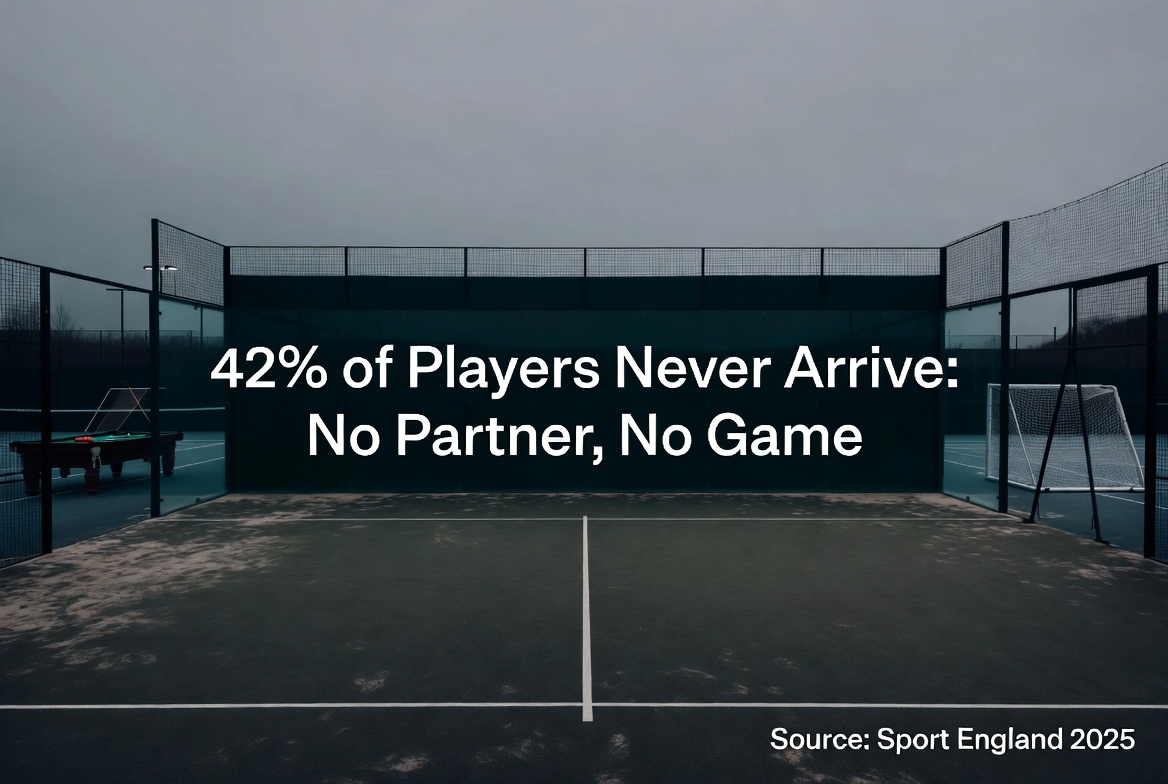
The latest data from Sport England paints a grim picture for 2025: 42% of potential sports participants in the UK never make it to venues, not because they’re uninterested, but because they can’t find someone to play with. This isn’t about laziness or weather – it’s a partner drought that’s quietly draining clubs dry. Imagine a tennis enthusiast ready for a doubles match, scrolling through contacts, posting on social media, getting silence. They stay home. Multiply that by millions, and venues lose out on bookings, subs, and bar spends that never happen.
In London alone, The Guardian’s investigation highlights how financial pressures are forcing councils to sell off sports centres, with empty slots contributing to massive revenue shortfalls. Players want to rally three or four times a week, but friends flake – work, family, injuries – and there’s no backup. No partner means no game, no visit. For snooker halls, it’s worse: a solo player racks up, waits 20 minutes for an opponent, leaves frustrated. BBC Sport reports that inactivity is costing the economy £20 billion annually, with social barriers like isolation driving people away from activities such as snooker, where 42% of casual players quit after one isolated visit. They came once, felt the loneliness, and switched to Netflix.
Football pitches suffer too – teams short two players can’t kick off, so the whole group bails. Golf courses see tee times ghosted because that foursome never materialized; one cancellation cascades into an empty slot. Across age groups, the stats are brutal: 35% of 16-24 year-olds inactive, rising to 40% for 25-34s, 45% for 35-44s, and over 70% for those 65+. A key barrier? Social isolation – no one to join. Venues think they’re half-booked, but they’re missing the invisible loss: potential regulars who never try because “who do I play with?” echoes unanswered.
This partner void isn’t just empty spaces; it’s churn on steroids. Members sign up excited, play once with a mate, then drop off when solo. Retention plummets 27%, per industry averages, costing the average club £35,000 annually in lost fees. Lights on, staff paid, but revenue evaporates before it arrives. Clubs bleed £187 million UK-wide, all because connections fail before the first serve.
How much longer can your venue survive when half your players can’t find someone to swing with?